
TL;DR: Nawalgarh is Shekhawati’s most underrated gem. Often skipped in favour of its neighbour Mandawa, this quiet town in north-east Rajasthan holds some of the finest and best-preserved frescoes in the entire region. From the Podar Haveli Museum’s 750-painting galleries to the intimate lanes of the Aath Haveli complex, every wall tells a story centuries in the making. This guide covers the best places to visit in Nawalgarh, what to do, when to go, and where to stay for the most enriching experience.
Most travellers who visit Shekhawati pass through Nawalgarh on the way to Mandawa and never stop long enough to really see it. That’s a quiet oversight — because by most accounts, Nawalgarh holds the finest and best-preserved frescoes in the entire region.
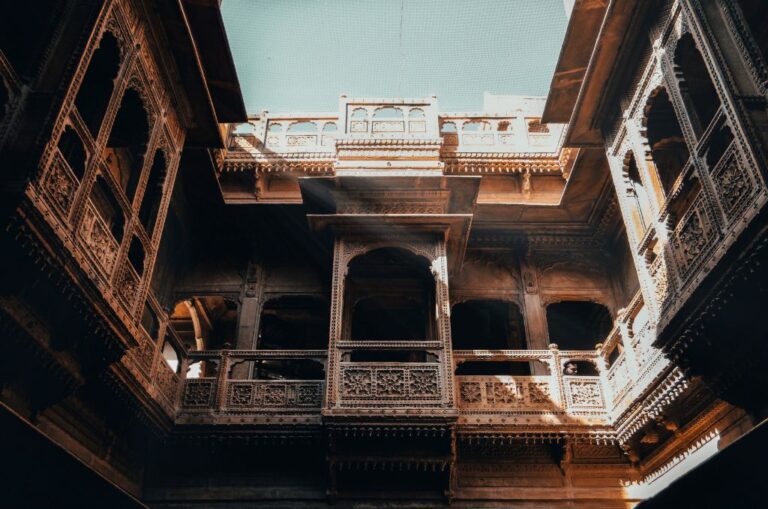
Founded in 1737 by Thakur Nawal Singh, this small town once sat at the heart of one of India’s most prosperous trading networks. Wealthy Marwari merchants built grand havelis here and covered them, inside and out, in vivid paintings. When trade routes shifted and families migrated to Calcutta and Bombay, their art stayed behind. Those paintings remain on the walls today, undisturbed, still catching the light the way they did two centuries ago.
Walk the old quarter at dawn, before the day warms up, and you’ll understand immediately why Nawalgarh deserves more than a passing glance.
What Makes Nawalgarh Different From Other Shekhawati Towns?
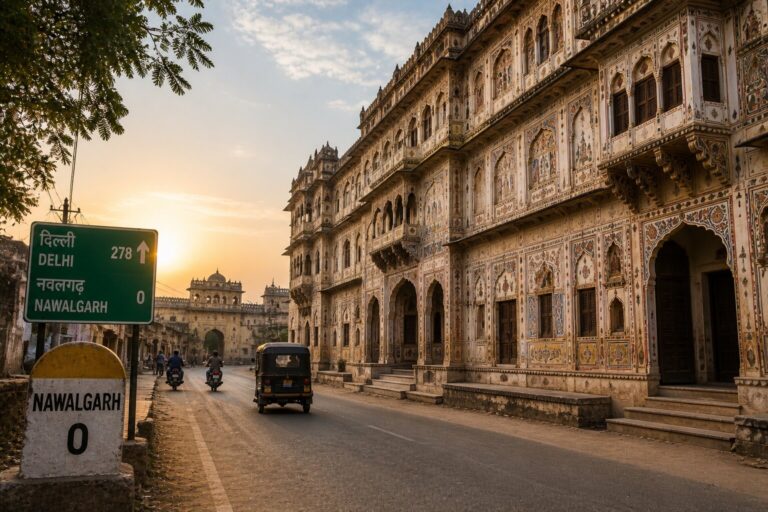
Nawalgarh is often called the golden city of Shekhawati, and it earns that title not through grandeur but through preservation. While neighbouring towns like Mandawa attract more footfall, Nawalgarh’s havelis have remained in better condition. The frescoes here are more vivid, the details more legible, and the atmosphere more quietly immersive.
There’s also a strong practical reason to begin your Shekhawati journey in Nawalgarh rather than Mandawa. The Podar Haveli Museum here functions as a masterclass in fresco art. Its galleries explain the symbolism, techniques, and themes you’ll encounter across the region. Visit it first, and every other haveli you see afterwards becomes richer and more meaningful.
Nawalgarh is a town where time has been gentler than elsewhere. It still feels like a living community rather than an open-air exhibit. That quality is rare, and it’s exactly what makes it worth staying for.
A Brief History of Nawalgarh
Before 1737, the site of present-day Nawalgarh was a small village called Rohili. That year, Thakur Nawal Singh, son of Shardul Singh and one of the most capable rulers of the Shekhawati region, chose this location to build a fort and establish a walled settlement. He named it after himself.
The town grew rapidly. Nawal Singh actively encouraged merchants to settle here, and the town’s position along trade routes connecting Delhi, Bikaner, and the ports of Gujarat made it an attractive commercial hub. Wealthy traders from the Marwari merchant community began arriving and building on a scale that reflected their prosperity. The larger the haveli and the more elaborate its frescoes, the more it announced a family’s standing in the world.
The paintings evolved over time. Early frescoes depicted Hindu mythology, royal processions, and local life. By the 19th century, colonial influence began appearing on the walls: steam trains, motorcars, the Wright brothers’ aeroplane, and British military figures sat alongside Lord Krishna and the goddess Lakshmi. It’s a visual record of a world in transition, preserved on plaster and pigment.
When trade routes shifted in the late 19th and early 20th centuries, merchant families gradually moved to Calcutta, Bombay, and Delhi. The havelis were locked, left to caretakers, and slowly forgotten. What remained is what visitors find today: one of the most concentrated collections of fresco art anywhere in the world, in a town that most people have never heard of.
Many of India’s great Marwari business families — the Goenkas, Poddars, Morarkas, and Birlas among them — trace their origins to Nawalgarh and the wider Shekhawati region.
Best Places to Visit in Nawalgarh
Nawalgarh rewards slow exploration. The attractions here are not destinations to rush through but places to sit with, to study, and to let speak. Here are the sites that deserve your time.
Dr. Ramnath A. Podar Haveli Museum is the finest starting point for any visit to Nawalgarh. Built in 1902, this beautifully restored haveli houses around 750 frescoes across ten curated galleries. The galleries cover themes from Rajasthani wedding customs and tribal culture to miniature paintings, jewellery, musical instruments, and architectural history. A guided tour of the Podar Museum will give you the vocabulary to read every other haveli you visit. The main gate alone, considered one of the finest doorways in all of Shekhawati, is worth the entrance fee.
Morarka Haveli offers something the Podar Museum can’t: original, unrestored character. Built by the Morarka merchant family, this haveli has never undergone the kind of careful conservation the Podar has received, which means it retains a rawer, more authentic atmosphere. The paintings are less polished but no less extraordinary. The Morarka family has undertaken significant documentation of its history, making it a valuable stop for anyone interested in the stories behind the art.
Aath Haveli Complex is a cluster of eight interconnected havelis that see fewer visitors than the two better-known properties. That relative quiet makes it one of the most rewarding spots in town for unhurried exploration and photography. The fresco work here is detailed and varied, and the interconnected courtyards give a strong sense of how these merchant families lived and organised their households.
Bala Qila (Nawalgarh Fort) was built by Thakur Nawal Singh in 1737 as the centrepiece of his new settlement. The fort’s interior dome contains one of its most fascinating features: a ceiling mural depicting an aerial map of both Nawalgarh and Jaipur, painted with extraordinary precision for its time. The fort also offers elevated views across the town’s rooftops and surrounding plains.
Bhagton Ki Haveli is one of the most eccentric properties in Nawalgarh and one of the most visually striking. Its frescoes blend Hindu iconography with colonial imagery in a way that feels playful and deliberate: gods and goddesses share wall space with European figures, mechanical inventions, and animals rendered in unexpected styles.
Kanhaiyalal Bagla Haveli, built in the 1920s, is among the newest of Nawalgarh’s significant havelis and among the most technically accomplished in its paintings. The frescoes here depict the Wright brothers’ first flight, early railways, hot air balloons, and other technological marvels of the era, alongside traditional Rajasthani themes. It’s a time capsule of early 20th-century wonder, painted onto plaster.
Shekha Museum at Vivaana Museum Hotel is a discovery that many visitors don’t expect. Housed within the beautifully restored Jaipuria Haveli that forms the Vivaana Museum Hotel, the Shekha Museum is a thoughtfully curated space dedicated to the heritage, fresco traditions, and cultural history of Shekhawati. Guests staying at the hotel have direct access. For day visitors, it offers an intimate and expert-guided perspective on the region’s artistic legacy that complements everything else you’ll see in town.
Stay in Shekhawati
Experience Nawalgarh From the Inside
Two restored 19th-century havelis. One unforgettable journey through Shekhawati.
Vivaana Museum Hotel
Jaipuria Haveli, Nawalgarh
A beautifully restored haveli in the heart of town. Home to the Shekha Museum, rooftop pool, and authentic Rajasthani dining.
Vivaana Culture Hotel
Churi Ajitgarh, Mandawa
A 150-year-old twin haveli with original frescoes, curated cultural experiences, and the warmth of Shekhawati hospitality.
What Are the Best Things to Do in Nawalgarh Beyond Sightseeing?
Nawalgarh rewards visitors who go beyond the main havelis and engage with the town as a living place. Some of the most memorable experiences here have nothing to do with any ticket or entrance gate.
Walking a fresco trail through the old quarter, ideally with a local guide, reveals dozens of painted walls on buildings that no formal tour lists. These are private havelis, temples, shop fronts, and residential walls — all carrying artwork that has simply always been there. A knowledgeable guide can read these paintings and explain what each image meant to the family that commissioned it.
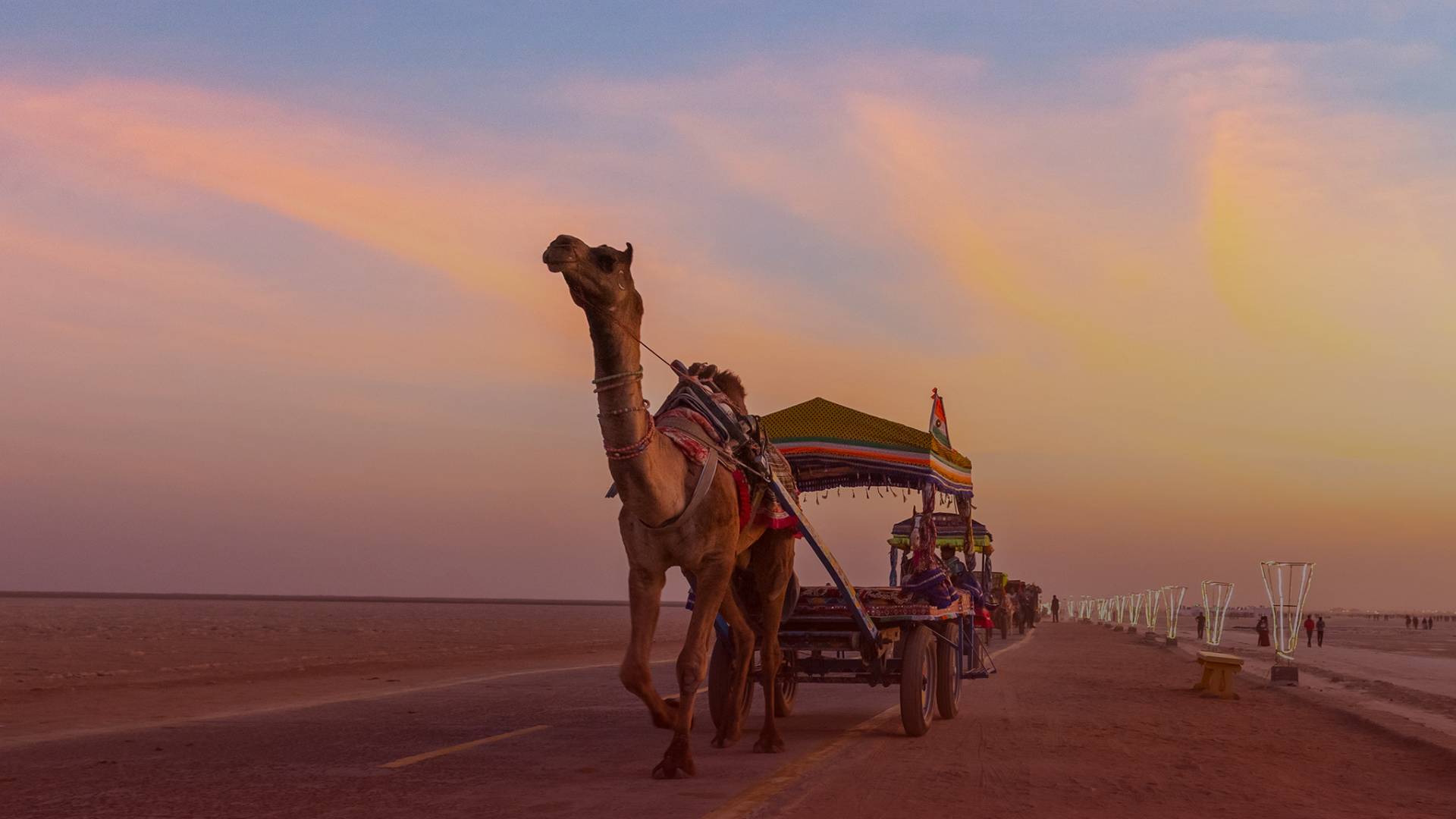
A camel cart ride through Nawalgarh’s lanes is a slower, more atmospheric alternative to walking. The elevated vantage point offers a different view of the haveli facades, and the pace encourages you to notice details that foot travel rushes past.
The Nawalgarh market, particularly the lane dedicated to Bandhini tie-and-dye textiles, is worth an hour of your time. Local craftspeople still produce traditional dupattas, sarees, and scarves using dyeing techniques practised in the region for centuries. Lacquer bangle workshops and leather jutti cobblers also operate in the older market streets.
Day trips from Nawalgarh extend the experience considerably. Dundlod, 20 km away, has a well-preserved fort and the Goenka haveli with its remarkable cenotaph paintings. Fatehpur, 26 km south-west, contains some of Shekhawati’s most elaborate fresco work. Mahansar, further east, is known for its gold-leaf frescoes inside the Sone Chandi ki Dukan. All three can be visited as half-day excursions from a Nawalgarh base.
In the evenings, a folk performance at a heritage property — puppet theatre, live Manganiyar or Langa music, or traditional storytelling — brings Rajasthan’s living cultural traditions into the space where you’re staying. It’s one of those experiences that sounds like a tourist attraction until you’re sitting in a lamplit courtyard listening to a musician whose family has played the same songs for a hundred years.
When to Visit Nawalgarh and How to Get There
October to March is the best time to visit Nawalgarh. Temperatures are comfortable for walking, the light is ideal for fresco photography, and the town is at its most welcoming. Summer months (April to June) bring extreme heat that makes outdoor exploration uncomfortable for most of the day.
Getting to Nawalgarh is straightforward from either Delhi or Jaipur. By road from Delhi, the journey covers approximately 266 km and takes around five to six hours via NH48 and NH11. From Jaipur, it’s roughly 140 km and around three hours by road. Nawalgarh has its own railway station (station code: NWH) with connections from Delhi and Jaipur, though the road journey offers more flexibility for those planning to explore the wider Shekhawati circuit.
Once in town, the best way to explore is on foot or by bicycle for the central haveli district, with an auto-rickshaw or hired car for day trips to nearby villages. Carry sufficient cash as ATMs can be limited in smaller parts of town. Dress modestly, especially when entering religious sites or private havelis. Always ask permission before photographing interiors of havelis that are still partially occupied.
One to two full days in Nawalgarh covers the main attractions comfortably. Two nights gives you space to explore at a slower pace and take at least one day trip into the surrounding Shekhawati villages — which is when the region really opens up.
Where to Stay in Nawalgarh: Why the Right Heritage Hotel Changes Everything
In Nawalgarh, your accommodation is not a logistical choice — it’s part of the experience itself. Staying inside a restored 19th-century haveli means waking up to painted ceilings, walking through courtyard gardens, and eating Rajasthani food in a dining room that was once a merchant’s reception hall. That texture can’t be replicated in a standard hotel, however comfortable.
The best place to stay in Nawalgarh for heritage travellers is the Vivaana Museum Hotel, set within the historic Jaipuria Haveli in the heart of town. The property is a beautifully restored 19th-century haveli with original frescoes, spacious rooms, a rooftop pool, and a restaurant serving authentic Rajasthani cuisine. What makes it genuinely distinctive is the Shekha Museum within the property itself — a curated space that brings the history and fresco traditions of Shekhawati to life for guests.
If you’re planning a wider Shekhawati circuit that includes Mandawa, pairing the Vivaana Museum Hotel in Nawalgarh with the Vivaana Culture Hotel in Mandawa gives you a seamless two-property heritage journey through the two finest towns in the region.
The Takeaway: Give Nawalgarh the Time It Deserves
Nawalgarh is the kind of place that changes how you travel, not just what you see. It asks you to slow down, to look closely, and to let the stories on the walls find their way into your memory.
Start here rather than in Mandawa. The Podar Museum will give you the context to see the whole of Shekhawati with much sharper eyes. Stay for at least two nights — one for the town itself, one for a day trip into the surrounding villages. And choose your accommodation thoughtfully. In Nawalgarh, the right heritage hotel doesn’t just put a roof over your head. It puts you inside the very story you came here to discover.
The Vivaana Museum Hotel is ready to welcome you. And when you’re ready to continue the journey to Mandawa, the Vivaana Culture Hotel is waiting there too.
Plan Your Stay
Ready to Explore Shekhawati?
Book a night in Nawalgarh, extend to Mandawa — or stay in both.
Vivaana Museum Hotel
Jaipuria Haveli, Nawalgarh
Your base for Nawalgarh’s fresco trails, museum visits, and day trips into the Shekhawati circuit.
Vivaana Culture Hotel
Churi Ajitgarh, Mandawa
Extend your Shekhawati journey to Mandawa — the region’s most celebrated painted town.
Frequently Asked Questions
Is Nawalgarh worth visiting compared to Mandawa?
Yes, and for many heritage travellers it’s the more rewarding stop of the two. Nawalgarh’s havelis are generally better preserved than Mandawa’s, and the Podar Haveli Museum provides context that makes every subsequent haveli you visit in the region far richer. Many seasoned Shekhawati travellers recommend starting in Nawalgarh for exactly this reason. The two towns complement each other well, and ideally both deserve at least one night each.
How many days do you need in Nawalgarh?
One full day covers the main havelis comfortably: Podar Museum, Morarka Haveli, Aath Haveli complex, and a lane walk. Two nights gives you a more relaxed pace plus time for at least one day trip to a nearby Shekhawati town such as Dundlod, Fatehpur, or Mahansar. If you’re combining Nawalgarh with Mandawa, a three-night Shekhawati itinerary — two in Nawalgarh, one in Mandawa — is ideal.
What is the best haveli to visit in Nawalgarh?
The Dr. Ramnath A. Podar Haveli Museum is widely considered the finest and most accessible haveli in Nawalgarh. Its 750 frescoes are beautifully preserved, its ten galleries are thoughtfully curated, and it offers guided tours that genuinely deepen your understanding of the art and architecture you’ll encounter throughout the region. Visit it first, ideally at the start of your Nawalgarh sightseeing.
How do I get to Nawalgarh from Delhi or Jaipur?
From Delhi, Nawalgarh is approximately 266 km by road and takes around five to six hours via NH48 and NH11. From Jaipur, the journey is roughly 140 km and takes around three hours. Nawalgarh has its own railway station (code: NWH) with train connections from both cities. The nearest major airport is Jaipur International Airport, around 140 km away.
What is the Shekha Museum in Nawalgarh?
The Shekha Museum is a curated heritage museum housed within the Vivaana Museum Hotel in Nawalgarh, set inside the beautifully restored Jaipuria Haveli. It is dedicated to the cultural heritage, fresco traditions, and artistic history of the Shekhawati region. Guests staying at the hotel have direct access to the museum as part of their stay, while day visitors are also welcome.