
TL;DR: Rajasthan’s museums hold as much wonder as its forts. From the grand Indo-Saracenic halls of Albert Hall Museum in Jaipur, opened in 1887, to a lakeside haveli in Udaipur where folk dancers perform each evening, these spaces carry the state’s cultural memory in ways that architecture alone cannot. This guide covers 10 of the best museums in Rajasthan, what makes each one worth the visit, and when to go.
Rajasthan’s Museums: More Than a Side Trip
Most travellers arrive in Rajasthan for the forts. They leave talking about something else.
It might be the Egyptian mummy housed inside a 19th-century palace in Jaipur. Or a restored haveli near Amber where artisans still press carved wooden blocks onto cloth in the old way. Or a fort museum in Jodhpur where the collection and the view over the city’s blue rooftops are equally extraordinary.
Rajasthan welcomed over 23 crore domestic tourists in 2024, a 28% increase over the previous year. Most come for the landscape and architecture. The ones who linger longest are those who find their way inside the museums.
This guide covers 10 of the best, arranged to help you plan a journey through Rajasthan that goes beyond the surface.
Key Takeaways
- Albert Hall Museum in Jaipur is the oldest museum in Rajasthan, opened in 1887, and houses sixteen galleries including a genuine Egyptian mummy.
- Several of Rajasthan’s best museums sit inside working palaces and forts, so visitors experience architecture and collection at the same time.
- The Anokhi Museum of Hand Printing near Amber is one of the few museums in India dedicated entirely to block printing, with live demonstrations running regularly.
- October to March is the ideal window for museum visits across Rajasthan, when the weather allows comfortable movement between indoor and outdoor heritage sites.
- Nawalgarh, in the Shekhawati region, has its own remarkable museum trail; guests staying at Vivaana Museum Hotel can explore it with the painted havelis of the town essentially at their door.
1. Albert Hall Museum, Jaipur
There is something immediately commanding about Albert Hall. It rises at the centre of Ram Niwas Garden in Jaipur: an Indo-Saracenic building designed by Sir Samuel Swinton Jacob and opened to the public in 1887. It is the oldest museum in Rajasthan and, over a century later, remains one of its most rewarding.
Inside, sixteen galleries hold an extraordinary range: miniature paintings, woven carpets, ivory carvings, ancient coins, marble sculptures, and a genuine Egyptian mummy that never fails to stop visitors in their tracks. The clay art and jewellery galleries are worth taking slowly.
The museum is also worth visiting after sunset. Between 7pm and 10pm it is illuminated from the outside, and the stonework glows in a way that feels genuinely theatrical. For first-time visitors to Jaipur, this is a natural starting point. For those who have been before, it rewards a second look.
2. City Palace Museum, Jaipur
Inside the working royal complex of Jaipur’s City Palace lies a museum that has been receiving visitors since 1959. The collections span centuries of Jaipur’s royal history: ceremonial weapons, gold-threaded textiles, manuscripts, and paintings that trace the cultural life of the Kachhwaha rulers.
The Chandra Mahal section in particular deserves time. Ceremonial armour, handguns from the royal collection, and court paintings fill rooms that feel lived-in rather than displayed. This is one of the finest palace museums in India, and the setting makes the collection feel less archival and more immediate. Allow half a day. The architecture alone earns it.
3. Mehrangarh Museum, Jodhpur
Perched 125 metres above Jodhpur on a ridge of volcanic rock, Mehrangarh Fort is one of India’s most dramatic structures. The museum inside it matches the scale of its surroundings.
Galleries are arranged thematically across the fort’s upper levels. The Palanquin Gallery holds a remarkable collection of ornate royal carriages. The Armory Gallery displays weapons that tell the story of Rajput military culture across several centuries. The painting galleries preserve the artistic tradition of the Marwar court in careful detail. Audio guides in multiple languages allow visitors to move through at their own pace.
Then there are the views. Looking out over Jodhpur’s famous blue rooftops from the fort walls is an experience that belongs alongside any gallery visit. Plan two to three hours here, and go in the morning before the crowds arrive.
4. Anokhi Museum of Hand Printing, Amber
A short walk from the cobbled streets of Amber brings you to one of Rajasthan’s most quietly wonderful museums. Housed in a beautifully restored haveli, the Anokhi Museum of Hand Printing is dedicated to one of Rajasthan’s most distinguished textile traditions: block printing. The collection displays carved wooden blocks, natural dyes, and printed fabrics spanning centuries.
Live demonstrations bring that history to life in a way a display case cannot. For design-minded visitors, or anyone who wants to understand what makes Rajasthani textiles distinctive, this is quietly unmissable.
5. Bagore Ki Haveli Museum, Udaipur
Built in the 18th century by Amar Chand Badwa, the Prime Minister of Mewar, Bagore Ki Haveli sits right on the banks of Lake Pichola at Gangaur Ghat. Its conversion into a museum has preserved over a hundred rooms filled with royal costumes, decorative arts, mirror work, and objects from traditional Rajasthani domestic life.
The collection is absorbing in its own right. But what sets Bagore Ki Haveli apart is the evening cultural performance: music, puppetry, and Rajasthani folk dance in a courtyard that frames Lake Pichola through the archways behind the stage. It is one of those rare museum experiences where the past does not feel still.
6. Ahar Museum, Udaipur
A few kilometres from the centre of Udaipur, near the Ahar Cenotaphs that mark the cremation sites of Mewar’s Maharanas, lies a smaller museum that rewards a quieter kind of curiosity. The collection includes earthen pottery from the Mesolithic age, artefacts from civilisations active around 1700 BC, and sculptures recovered from the surrounding archaeological sites.
It is compact and unhurried: the kind of museum where you can actually read every label without feeling rushed. The cenotaphs just outside are worth the visit on their own. Together, the two sites offer a version of Udaipur’s past that the lakefront palaces do not reveal.
7. Ajmer Government Museum
The setting here does much of the work. Housed within the magnificent fortified palace that Mughal Emperor Akbar built in 1570, this museum carries the weight of its surroundings from the first step inside.
The collection covers Mughal armour, ancient manuscripts, inscriptions, and sculptures that connect Ajmer to its central role in the meeting of Rajput and Mughal cultures. The museum is modest in scale, manageable in an hour, and makes an easy pairing with a visit to the Dargah Sharif, which sits a short walk away. Entry fees are minimal. The experience of standing inside an Akbar-era fortified palace is not.
8. Bharatpur Palace Museum
Inside Lohagarh Fort, one of the few forts in Rajasthan that successfully resisted British siege, lies a museum that carries its setting’s quiet pride. The collection holds over 581 stone sculptures and more than 861 artefacts representing the art and craft heritage of the Bharatpur region. Royal weapons, textiles, and ancient scriptures fill rooms that speak of an independently minded kingdom with a distinct cultural voice.
The museum is compact enough for an hour and pairs naturally with a morning at Keoladeo National Park, just a few kilometres away, making Bharatpur a worthwhile stop on the route between Jaipur and Agra.
9. Government Museum, Bikaner
Bikaner sits at the western edge of most Rajasthan itineraries, and this museum is frequently skipped in favour of the better-known Junagarh Fort nearby. It is a quiet miss. The collection covers terracotta items, miniature paintings, coins, and artefacts tracing back to the Indus Valley civilisation: a window into the desert history of western Rajasthan that the forts and palaces do not quite provide.
It adds no more than an hour and a half to your day in Bikaner. What it adds to your understanding of the region is considerably more.
10. Government Museum, Alwar
Alwar sits well placed between Delhi and Jaipur, which makes it a natural stop for travellers on that corridor. Its Government Museum is one of the most overlooked institutions in Rajasthan. The collection includes rare manuscripts, miniature paintings from the distinctive Alwar school, and sculptures from different historical periods.
The rooms feel calm and unrushed. There are no large crowds. For anyone who finds the bigger Jaipur museums overwhelming, Alwar offers a genuinely peaceful encounter with Rajasthani heritage.
When to Visit Museums in Rajasthan
October to March is the right window. Rajasthan’s winters are clear and mild, making it comfortable to move between indoor museum spaces and outdoor heritage sites within the same day. This period also coincides with major cultural festivals: the Pushkar Camel Fair in November, the Jaipur Literature Festival in January, and the Desert Festival in Jaisalmer in February, all of which add another layer of richness to a museum-led itinerary.
Most museums open between 9am and 10am and close between 4:30pm and 5pm. Many observe closures on specific weekdays or public holidays, so confirming timings in advance is always sensible. Hiring a local guide at the larger museums, particularly Albert Hall and Mehrangarh, will deepen what you take away far beyond what printed labels alone can offer.
A Place to Stay That Feels Like a Museum
For travellers drawn to cultural depth, where you stay shapes the whole experience.
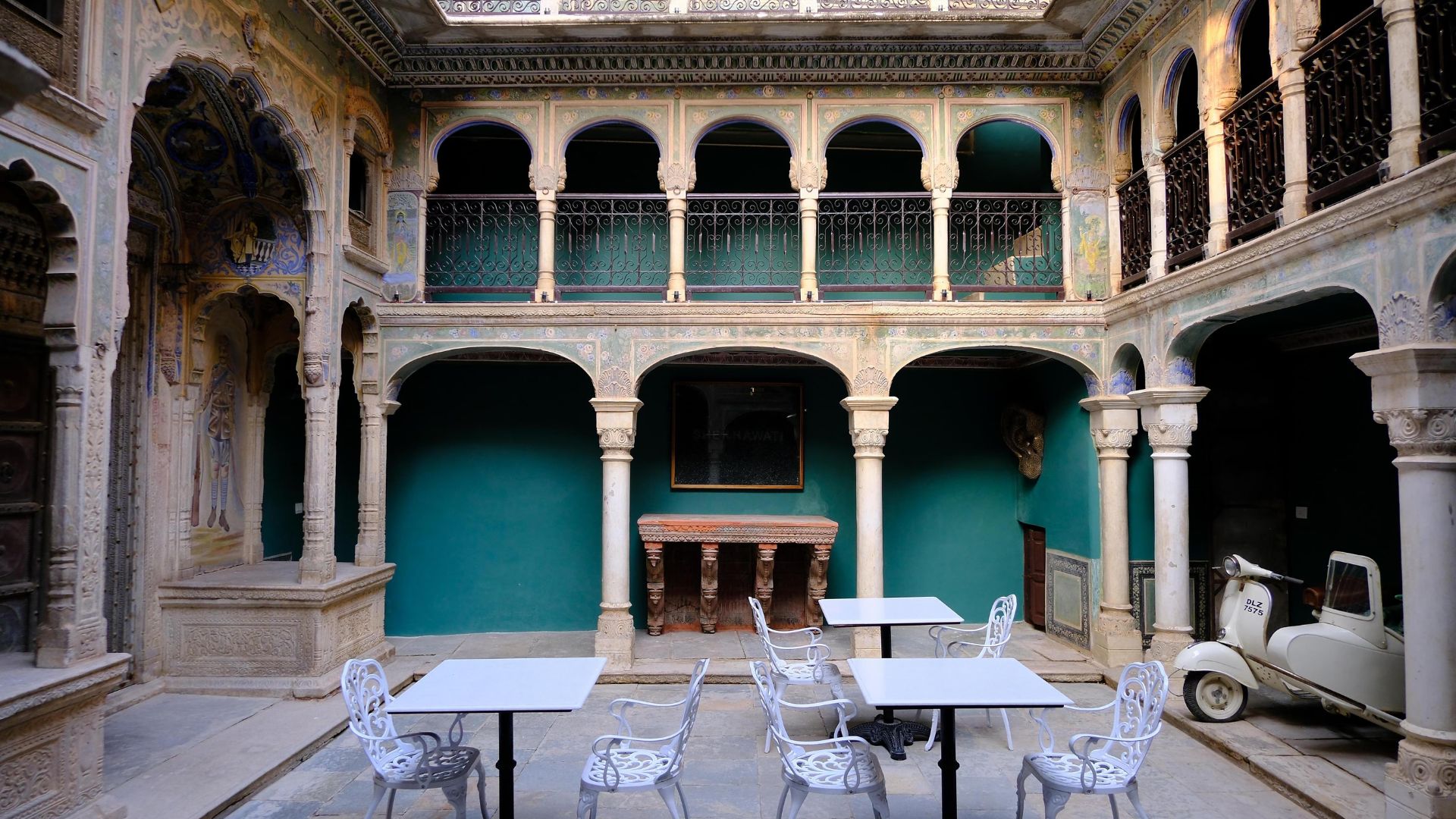
Vivaana Museum Hotel in Nawalgarh is a beautifully restored Shekhawati haveli with eight rooms, an on-site museum of historical curios and paintings, and walls covered in the region’s signature frescoes. The hotel sits in the heart of Nawalgarh, a town surrounded by the painted havelis of the Shekhawati region, one of Rajasthan’s most remarkable and least crowded cultural landscapes. Here, the museum does not end when you check in. It continues through the corridors, the courtyard, and into the rooms themselves.
Vivaana Museum Hotel • Nawalgarh, Shekhawati
Stay Where History Doesn’t End at Closing Time
Eight rooms inside a restored haveli in Nawalgarh. An on-site museum, frescoed walls, and the Shekhawati heritage trail at your door.
Frequently Asked Questions
What is the oldest museum in Rajasthan?
Albert Hall Museum in Jaipur is the oldest museum in Rajasthan. It was opened to the public in 1887 and designed by Sir Samuel Swinton Jacob in the Indo-Saracenic style. Also known as the Government Central Museum, it houses sixteen galleries covering art, jewellery, textiles, natural history, and a rare Egyptian mummy.
Which museums in Rajasthan are best for families?
Albert Hall Museum, Mehrangarh Museum in Jodhpur, and Bagore Ki Haveli Museum in Udaipur work especially well for families. Mehrangarh’s audio guides keep visitors of all ages engaged, and Bagore Ki Haveli’s evening folk performance, with music, puppetry, and dance, adds a lively cultural dimension that children tend to enjoy. For families staying in Nawalgarh, Vivaana Museum Hotel has its own on-site museum, which is a good first encounter with Rajasthani heritage before heading out to the surrounding havelis.
Are museums in Rajasthan open every day?
Most museums in Rajasthan are not open every day. Many close on Mondays or on specific public holidays, and timings vary between institutions. Checking current hours through the official Rajasthan Tourism website before your visit is always advisable, particularly for smaller regional museums where seasonal adjustments are common.
How much time should I set aside for a museum visit in Rajasthan?
For smaller or specialist museums such as the Anokhi Museum of Hand Printing or Ahar Museum, one to one and a half hours is generally sufficient. For larger collections like Albert Hall or Mehrangarh Museum, plan for two to three hours. A local guide at either of these will make the time considerably more meaningful.
Which city in Rajasthan has the most museums?
Jaipur has the highest concentration of museums in Rajasthan, including Albert Hall Museum, City Palace Museum, Hawa Mahal Museum, and the Jaipur Wax Museum. Jodhpur and Udaipur are also well served, with Mehrangarh Museum and Bagore Ki Haveli respectively standing among the state’s finest. For the Shekhawati region, Nawalgarh is the natural base: its havelis function as open-air museums, and Vivaana Museum Hotel keeps a curated collection of historical artefacts and paintings on-site.