
TL;DR: Nawalgarh is one of Rajasthan’s most rewarding destinations and one of the least crowded. It sits about 250 km from Delhi, roughly a 5-hour drive, with train options from Delhi Sarai Rohilla twice a week. The best time to visit is October to March. Two days is enough to see the havelis, the Podar Haveli Museum, the fort, and the surrounding Shekhawati towns. This guide covers everything you need before you go.
Most people who drive from Delhi to Rajasthan end up in Jaipur. Some make it to Jodhpur or Udaipur. Very few think to stop in Nawalgarh — and that is precisely what makes it worth the trip.
Nawalgarh sits in the Shekhawati region of northeastern Rajasthan, about 250 km from Delhi. It holds some of the finest and best-preserved fresco havelis in India, a fort founded in the 18th century, a world-class haveli museum, and the kind of quiet, unhurried atmosphere that the more famous Rajasthan cities have long since lost. Most travellers who visit for the first time say the same thing: they wish they’d come sooner, and they wish they’d stayed longer.
Here is everything you need to know before you go.
How Far Is Nawalgarh from Delhi?
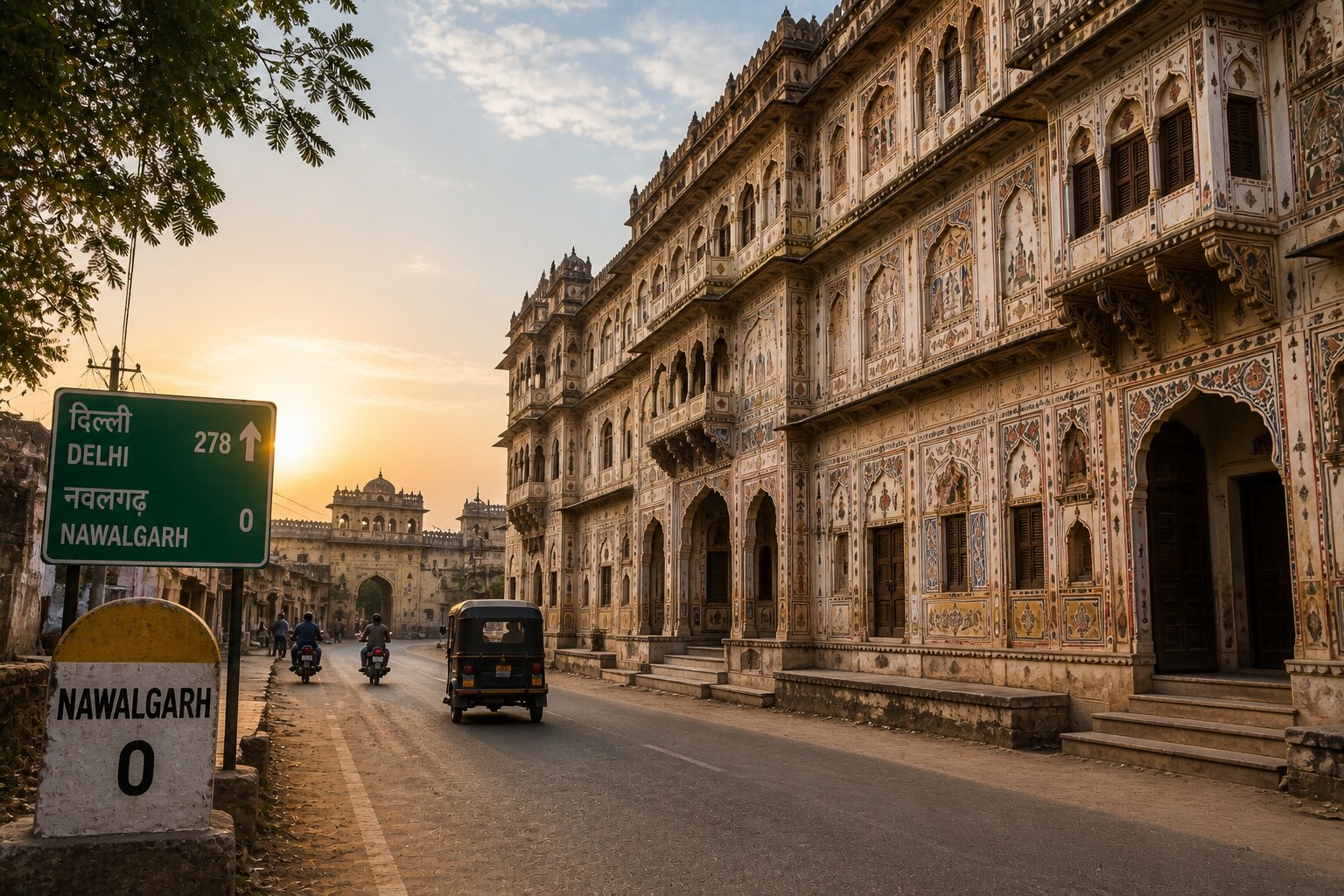
Nawalgarh is approximately 250 km from Delhi by road, which takes around 4.5 to 5 hours depending on traffic. The route runs via NH48 through Gurgaon and Rewari, then NH52 toward Jhunjhunu and on to Nawalgarh. It’s a straightforward drive with good road conditions for most of the journey.
The distance makes Nawalgarh ideal for a weekend trip. Leave Delhi on Friday evening or early Saturday morning, spend two full days exploring the town and its surroundings, and return comfortably on Sunday evening. No flights, no complex logistics — just a clean road drive through the Haryana plains into the desert edge of Rajasthan.
How to Reach Nawalgarh from Delhi
There are three main ways to get here, and each suits a different kind of traveller.
By road (recommended). Driving yourself or hiring a cab is the most flexible option. The journey takes approximately 5 hours by cab. Having your own vehicle means you can stop at Neemrana Fort on the way, explore nearby Shekhawati towns like Mandawa and Dundlod, and move at your own pace throughout the trip. This is the recommended approach for anyone who wants to make the most of the region.
By train. Indian Railways operates a service from Delhi Sarai Rohilla to Nawalgarh twice a week, with a journey time of around 5.5 hours. It’s the cheapest option and comfortable for those who prefer not to drive. The limitation is frequency — only twice a week — so timing your trip around available trains is essential. From Nawalgarh station, the town centre is easily accessible by auto-rickshaw.
By bus. RSRTC and private operators run buses from Delhi to Mandawa and Jhunjhunu, from where Nawalgarh is a short taxi or auto-rickshaw ride away. Bus journeys typically take 6 to 7 hours. It’s the most affordable option but also the most time-consuming.
For most travellers coming from Delhi for a weekend, a hired cab or self-drive is the best balance of convenience, flexibility, and comfort.
What Is the Best Time to Visit Nawalgarh?
The best time to visit Nawalgarh is between November and March, when temperatures are pleasantly cool. Daytime temperatures sit between 15°C and 26°C. Nights can drop to around 9°C to 10°C in December and January, so carry a light jacket if you’re visiting in the heart of winter.
Summers (April to June) push temperatures above 40°C, which makes outdoor haveli-walking uncomfortable and sometimes impractical. The monsoon months of July to September bring some relief from the heat but also humidity. Neither season is ideal for a sightseeing-focused trip.
October is a good entry point into the season: temperatures are settling, skies are clear after the monsoon, and the town is not yet at peak tourist volume. November through February is the sweet spot. March is the last comfortable month before the heat returns.
One practical note: Nawalgarh is a largely vegetarian town. Many locals consider it a sacred place and non-vegetarian food is restricted in much of the town. If you’re a non-vegetarian traveller, plan accordingly.
Where to Stay in Nawalgarh
Stay Inside a Heritage Haveli at the Heart of Town
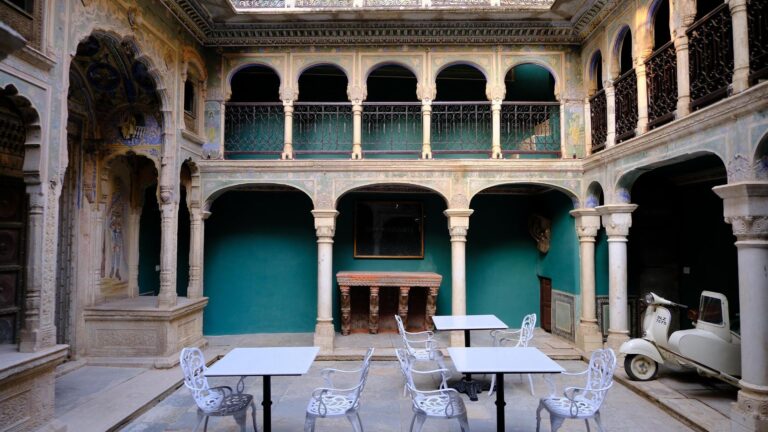
Vivaana Museum Hotel is a beautifully restored 19th-century haveli in Nawalgarh, with frescoed corridors, an in-house museum, rooftop pool, and the signature Ambri restaurant. The best base for exploring Shekhawati.
Nawalgarh
Vivaana Museum Hotel
8 uniquely decorated rooms, Shekha Museum, rooftop pool, and authentic Rajasthani dining at Ambri.
Museum & Culture
Vivaana Museum Experience
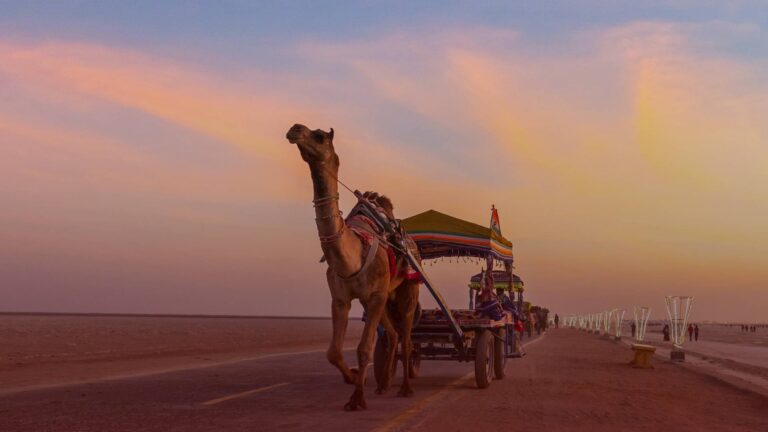
Guided museum walks, village tours, cultural evenings, camel cart rides, and creative workshops.
What to See in Nawalgarh: Top Attractions
Nawalgarh rewards slow exploration. The town is compact enough to cover most of on foot, but rich enough that two days pass quickly. Here are the places worth your time.
Dr. Ramnath A. Podar Haveli Museum. This is the first place to visit in Nawalgarh, and possibly the best single haveli in all of Shekhawati. Built in 1902, it has over 750 well-preserved fresco paintings with documented guided tours. The fresco subjects span Hindu mythology, royal processions, colonial-era locomotives, early aeroplanes, and the Wright Brothers’ first flight. The guided tour here is genuinely excellent — budget at least 90 minutes. There is a small entrance fee.
Aath Havelis. Aath means eight, and this is a complex of eight connected mansions on the western side of the Nawalgarh Fort. The frescoes include detailed paintings of elephants, camels, and horses alongside images of steam locomotives, marking the transition between the traditional and colonial eras. Each section has its own character. Photography enthusiasts will want to spend considerable time here.
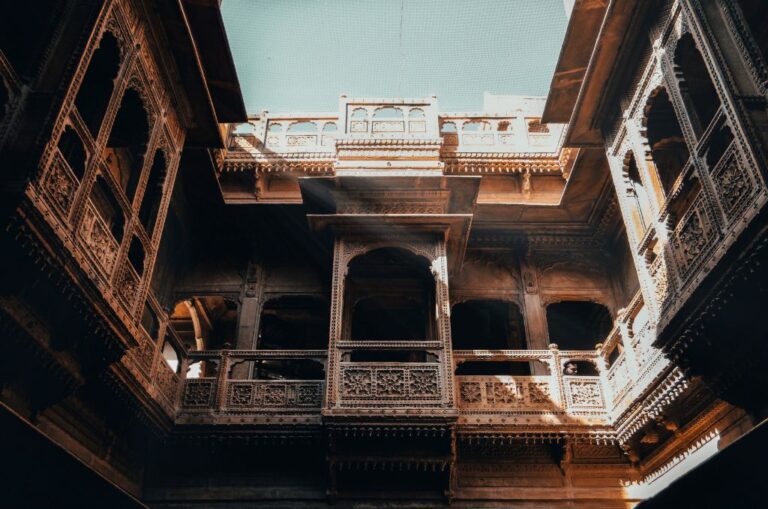
Bhagton Ki Choti Haveli. One of the finest and least crowded havelis in Nawalgarh. The Nawalgarh havelis are generally better preserved than those in Mandawa, and this one is a particularly good example: an enormous carved wooden gate, two courtyards in sequence, and frescoes covering walls and corridors on themes from folk mythology, Holi celebrations, and scenes of Krishna and the Gopis alongside a painted locomotive and steamship.
Morarka Haveli. Well-restored and privately maintained, this haveli retains an authentic lived-in quality that some of the more touristified properties have lost. The frescoes here are vivid and detailed, and the atmosphere is quieter than at the Podar Museum.
Nawalgarh Fort (Bala Kila). Built by Maharaja Nawal Singh in 1678 AD, the fort is guarded on all four sides by iron-doored gates. It’s smaller and simpler than Rajasthan’s famous forts but offers a peaceful climb with views over the town’s lanes and haveli rooftops. The dome inside contains a ceiling mural with a painted aerial map of both Nawalgarh and Jaipur.
Sheesh Mahal. The Palace of Mirrors. The ceiling mural here is extraordinary: it includes detailed painted maps of Nawalgarh and Jaipur, which is remarkable as an artefact of how this region saw itself in relation to the wider world.
The Vivaana Shekha Museum. If you’re staying at Vivaana Museum Hotel, the in-house Shekha Museum is a curated collection of historical artefacts and artworks from the merchant era. It provides excellent context for everything else you’ll see in Nawalgarh and is accessible to hotel guests as part of the stay experience.
The street lanes themselves. Some of the best moments in Nawalgarh happen outside any official attraction. The narrow lanes between havelis are lined with painted facades, carved wooden doorways, old temples, and small shops. Walk slowly. Look up. Turn into lanes that don’t look particularly significant. The town rewards curiosity.
Day Trips from Nawalgarh: Exploring the Wider Shekhawati Region
Nawalgarh makes an excellent base for the surrounding Shekhawati towns, most of which are within easy driving distance.
Mandawa (30 km). The most famous Shekhawati town and the one most travellers have heard of. It holds the Chokhani double haveli, Murmuria haveli, and the fort founded by Nawal Singh’s father. Plan a full day here. Vivaana Culture Hotel in Mandawa is worth visiting even if you’re not staying — the 150-year-old twin haveli with original frescoes is one of the finest restored properties in the region.
Dundlod (8 km). A short drive from Nawalgarh, Dundlod is known for its 18th-century fort and the Goenka Haveli. You can visit Dundlod Fort, the Goenka Haveli, and the Goenka cenotaph comfortably in a half-day. The fort now operates as a heritage hotel and offers horse-riding excursions through the countryside.
Ramgarh (50 km). Less visited than Mandawa or Nawalgarh, Ramgarh is considered by many connoisseurs to have the most intact frescoes in Shekhawati. The paintings here cover not just havelis but shops, temples, and wells — the entire town is a gallery. Worth an afternoon if you have the time.
Fatehpur (54 km). Famous for the Nadine Le Prince Haveli, a 19th-century mansion restored by a French artist that now operates as a gallery and boutique hotel. The frescoes here show fascinating colonial-era fusion, including images of Jesus alongside Hindu deities. Often combined with a visit to Ramgarh.
Jhunjhunu (30 km). The district headquarters of Shekhawati and home to the Rani Sati Temple, one of the most significant temples in the region. Also has grand havelis of its own, including the Khetri Mahal. A good addition to a longer Shekhawati itinerary.
A Sample 2-Day Itinerary from Delhi
Day 1. Leave Delhi by 7 AM. Drive to Nawalgarh, arriving around noon. Check in and have lunch. Spend the afternoon at the Podar Haveli Museum — allow at least 90 minutes and take the guided tour. Walk the street lanes around the haveli area in the late afternoon when the light is good. In the evening, have dinner at Ambri restaurant at Vivaana Museum Hotel or explore the local market for street food: kachoris, mirchi bada, and fresh chai at one of the market stalls.
Day 2. Start early at the Aath Havelis and Bhagton Ki Choti Haveli before the midday heat. Visit Nawalgarh Fort and Sheesh Mahal mid-morning. After lunch, drive to Dundlod (8 km) to see the fort and Goenka Haveli. Return to Nawalgarh for an evening camel cart ride and cultural performance if arranged through your hotel. Depart for Delhi the following morning or later that evening for a Sunday night arrival.
Practical Tips Before You Go
A few things that will make your trip smoother.
Cash is important. ATMs are available in Nawalgarh but can be limited. Carry sufficient cash before you arrive, especially for entrance fees at havelis, auto-rickshaw rides, and local market shopping.
Hire a local guide. The havelis of Nawalgarh tell complex stories across multiple layers of history, faith, and cultural encounter. A knowledgeable local guide transforms a walk through painted walls into a genuinely immersive experience. Your hotel can usually arrange one. Budget for at least half a day of guided exploration.
Dress modestly. Nawalgarh has a conservative local culture. When visiting havelis, temples, and the Rani Sati temple at Jhunjhunu, wear clothing that covers shoulders and knees. Remove shoes before entering religious sites.
Walk slowly. The instinct when visiting a new place is to move quickly and cover as much as possible. Nawalgarh punishes that approach. The best moments here come from stopping in front of a single fresco for ten minutes, following a lane that looks unpromising, or striking up a conversation with a caretaker. Give yourself time.
Visit early. The best light for photography is in the morning, between 7 AM and 10 AM, when the fresco colours are vivid and the streets are quiet. The midday sun flattens everything. Plan your most important haveli visits for the morning hours.
The road from Delhi to Nawalgarh passes through flat Haryana plains and then, gradually, into the dry beauty of Shekhawati. The landscape changes. The pace changes. By the time you reach the town and step into the first fresco-lined courtyard, the distance from the city feels much greater than 250 km.
That’s what Nawalgarh does. It takes you somewhere genuinely different.
If you’re planning your trip, Vivaana Museum Hotel is the ideal base: beautifully restored, centrally located, and deeply connected to the heritage you’ve come to see. Explore the Vivaana Museum Experience for guided walks, cultural evenings, and everything else the region offers.
Plan Your Visit
Book Your Nawalgarh Stay at Vivaana Museum Hotel
A restored 19th-century haveli in the heart of Nawalgarh. Frescoed rooms, an in-house museum, rooftop pool, Rajasthani dining, and curated cultural experiences — the perfect base for exploring Shekhawati.
Nawalgarh
Vivaana Museum Hotel
8 uniquely crafted rooms inside a beautifully restored haveli. Free breakfast, rooftop pool, and Shekha Museum on-site.
Also in Shekhawati
Vivaana Culture Hotel, Mandawa
A 150-year-old twin haveli with original frescoes, 30 km from Nawalgarh. Perfect for a 2-town Shekhawati trip.
Frequently Asked Questions
How far is Nawalgarh from Delhi and how long does it take to drive?
Nawalgarh is approximately 250 km from Delhi by road. The drive takes around 4.5 to 5 hours depending on traffic, following NH48 through Gurgaon and Rewari, then NH52 toward Jhunjhunu. It’s a straightforward drive with good road conditions for most of the route. A hired cab or self-drive is the most flexible option for a weekend trip.
Is there a train from Delhi to Nawalgarh?
Yes. Indian Railways operates a service from Delhi Sarai Rohilla to Nawalgarh twice a week, with a journey time of around 5.5 hours. Tickets are affordable but the limited frequency means you need to plan your departure and return dates around available train timings. From Nawalgarh station, the town centre is easily reached by auto-rickshaw.
How many days do you need in Nawalgarh?
Two days is enough to see the main havelis, the Podar Haveli Museum, Nawalgarh Fort, and take a half-day trip to nearby Dundlod. If you want to include Mandawa (30 km), Ramgarh (50 km), or Fatehpur (54 km), add a third day. Nawalgarh works well as a hub for exploring the wider Shekhawati region over 3 to 4 days.
What are the must-visit places in Nawalgarh?
The Podar Haveli Museum is the single most important attraction — allow at least 90 minutes and take the guided tour. The Aath Havelis and Bhagton Ki Choti Haveli are excellent for fresco viewing. Nawalgarh Fort offers a good view over the town and holds a remarkable ceiling mural. The street lanes between havelis are worth wandering without a specific destination in mind.
What is the best time to visit Nawalgarh from Delhi?
November to March is the best time to visit. Temperatures are pleasant for outdoor exploration, with daytime highs between 15°C and 26°C. December and January nights can be cool, so bring a light jacket. Avoid the summer months from April to June when temperatures frequently exceed 40°C and make outdoor sightseeing uncomfortable.